
Snowman, The (Blu-ray Review)
Director
Tomas AlfredsonRelease Date(s)
2017 (May 26, 2026)Studio(s)
Working Title/Perfect World/Universal Pictures (Kino Lorber Studio Classics)- Film/Program Grade: C
- Video Grade: A
- Audio Grade: B-
- Extras Grade: A

Review
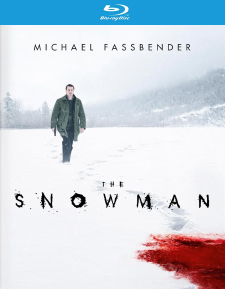
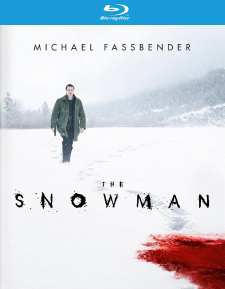
Norwegian crime novelist Jo Nesbo has written thirteen murder mysteries featuring brooding police detective Harry Hole. Set under overcast skies on the frozen tundra, The Snowman is the first film adaptation of one of Nesbo’s books. A killer taunts authorities amid a conspiracy involving powerful public figures.
Norwegian detective Harry Hole (Michael Fassbender) is a heavy drinker who’s lost enthusiasm for his job. When he’s not passed out in public, he occasionally shows up to his job at the Oslo Crime Squad. He has a self-destructive bent apart from his alcohol addiction. He chain smokes, alienates colleagues, tries the patience of his boss, and ignores warnings about black mold pervading his apartment. Harry maintains a wary relationship with his ex-lover, Rakel (Charlotte Gainsbourg), acting as an estranged father figure to her teenage son, Oleg (Michael Yates).
Harry becomes intrigued by a note from a killer signed with a sketch of a snowman. Assisted by rookie Katrine Bratt (Rebecca Ferguson), Harry observes that a pattern has emerged about several of the victims. They all have had abortions and disappeared in the area on snowy days. Together, Harry and Katrine attempt to track down the murderer.
Director Tomas Alfredson is fond of minimal dialogue, with visuals telling the story. This results in some spectacular cinematography of the frozen, snow-blanketed locations but leads to confusing plot development. The director also seems to favor such extreme reserve in performances that a key ingredient of the mystery thriller is virtually absent—suspense. There’s little interaction, or cat-and-mouse byplay, between Harry and the killer and little sense of friction between him and his rookie partner or his ex-lover. The pace is so slow and plodding that momentum never builds. Alfredson directs the actors on the same note throughout so that we seldom observe variations in their mood or reactions to developments.
Fassbender, an accomplished actor who usually inhabits the characters he plays, can’t get a handle on Harry. In the books, Harry is a larger-than-life heroic figure, sort of the Nordic Clint Eastwood. In The Snowman, Fassbender doesn’t convey that gravitas, threat, or power. He never presents a strong image. There’s zero chemistry between him and Ferguson. It’s as if their characters are working separate cases. There’s no sense of camaraderie, tension between them, or growing excitement as they close in on the killer. This may have been a deliberate choice by the director to represent the stereotypically stolid Nordic temperament, but it misses a major opportunity to spark the audience’s interest. With a talented cast and a solid literary source, the lackluster tone of the film must be attributed to director Alfredson.
Jonas Karlsson plays Mathias, Rakel’s current lover, a mild-mannered man who has reason to feel jealous about the continuing presence of Harry in Rakel and Oleg’s life. But, again, Karlsson is directed so as to make him almost invisible. Like most of the other actors, he has been reduced to delivering dialogue with a minimum of expression.
In flashback scenes taking place nine years before the main action, we meet Gert Rafto (Val Kilmer), a detective who investigated the same type of murders. His work on a now cold case provides the backstory of the current investigation. Looking more like a homeless old man than a cop, Kilmer’s character reminded me of gumshoes of the 1940s.
The lifeless performances are an unusual choice for Alfredson, whose two previous films—Let the Right One In and Tinker Tailor Soldier Spy—elicited high-caliber performances in each. In most cases, visual storytelling is an asset in film, but Alfredson goes to extremes, leaving gaps in the narrative that raise questions and make the plot hard to follow. We get the sense that a lot is at stake, but this is conveyed in the set-up, not in the enactment. Often, Harry shows up at a location and we aren’t sure where he is. There’s also a curious subplot involving a powerful industrialist (J.K. Simmons) who enjoys taking pictures of bare-breasted young women that goes nowhere. And Katrine has little to do. When her motivations become clear, there’s hardly any dramatic impact.
From time to time, Alfredson includes some gory, bloody scenes that reveal the sadistic bent of the killer. These are disturbing but at least lift the film’s energy level a bit.
One of the best elements of The Snowman is Dion Beebe’s beautiful cinematography, which captures the wide expanse of a frozen landscape in all its icy splendor. The atmosphere is so palpable, you can almost feel the chill. Beebe’s photography gives a considerable lift to an otherwise bland film.
Despite the talent involved, The Snowman has the look and feel of a film student’s first effort. Ineptly edited, misguidedly directed, with a sluggish pace and lackluster performances, the film fails to capture the key elements of a successful police procedural/thriller.
The Snowman was captured digitally by director of photography Dion Beebe with Arri Alexa XT Plus cameras with Cooke S4, Vantage One, and Angenieux Optimo lenses, and presented in the aspect ratio of 1.85:1. Released simultaneously on Blu-ray and 4K Ultra HD by Kino Lorber Studio Classics, the film is enhanced by the photography of the stark Norwegian landscape with trees looking as if they’re coated in flour. Many scenes have a bluish cast, which suggests the beautiful but frigid Scandinavian weather. The ever-grey sky adds a sense of gloom. Director Tomas Alfredson shoots many scenes routinely, with two shots alternating with close-ups for dialogue exchanges. Aerial drone shots of moving vehicles (cars, boats, trains) in motion emphasize how the expansive environment dwarfs them. Special effects are evident in the bloody scenes of the killer’s penchant for horrific murders. These intense scenes differ markedly from the rest of the film. In a couple of scenes, large, darkened areas have a noir feel.
There are two soundtrack options: English 5.1 and 2.0 DTS-HD Master Audio. English subtitles are an option. Dialogue is minimal, with the narrative unfolding primarily through visuals. Additional dialogue would have helped clarify actions, identify locations, and improve narrative flow. There’s no consistency of accents even though all characters are Norwegian. Mood is heightened by the constant sound of wind when exteriors are shown. Marco Beltrami’s score attempts to add suspenseful themes but they aren’t enough to counteract the film’s snail-like pace. Disturbing sounds accompany equipment used by the killer and a crucial shotgun blast creates the film’s grisliest special effect.
Bonus materials on the Blu-ray release from Kino Lorber Studio Classics include the following:
- Audio Commentary by Steve Mitchell and Michael Charles Hill
- Audio Commentary by Howard S. Berger and Marc Edward Heuck
- Cast of Characters (7:47)
- Creating Jo Nesbo’s World (4:06)
- The Snowman Killer (4:04)
- Norwegian Landscape (6:34)
- Stunt Files: The Sinking Lake (1:37)
- Trailers:
- The Snowman (2:25)
- Tinker Tailer Soldier Spy (2:01)
- Red Dragon (2:06)
- Suspect Zero (2:14)
- Eastern Promises (2:22)
- Twisted (2:03)
- The Hunted (2:22)
Audio Commentary #1 – Filmmaker/film historian Steve Mitchell and screenwriter Michael Charles Hill share this commentary. Both are fans of “Nordic noir.” An unfamiliar world opens the film—a forbidden white wilderness—“right out of the gate.” This is an environment little known by the outside world. Nordic noir is a sub-genre of fiction. The entire opening sequence is disturbing because of the abused mother’s passiveness and her failure to acknowledge her son. Director Tomas Alfredson is very cinematic. He lets his pictures tell the story and doesn’t like verbal exposition. Based on the novel written in 2007, the film was intended to be the first in a series of features. The strength of the film is “using the room”—maximizing locations. There are no actual sets. The inspiration was the Alex Cross movies. The hope of creating a feature franchise was abandoned when the film was a critical and popular disappointment. The film had a built-in audience because of author Nesbo’s popularity. Harry Hole is an outsider—an outlier. Trained by the FBI, Harry is good at what he does. His boss “cuts him a little slack” because of his past achievements. He’s tolerated. Characters are positioned against impressive settings. Alfredson present characters by dropping clues about them. Harry is shown working a case as he’s analyzing the clues. He’s warm toward a child and good at reading people, but he feels alienated from the world. He relies on his intuitive skill as a police investigator.
Audio Commentary #2 – Film historians Howard S. Berger and Marc Edward Heuck point out that Nordic melodramas have a stately tone. The Snowman has a lot of sleazy details under an elegant veneer. Writer Jo Nesbos is a cultural “jack of all trades.” Everything is hiding something for another reason. The commentators say that expectations are a “cinematic killer” because viewers often have pre-determined ideas about the film they’re about to see. Selling a film is the art of presenting it as somewhat familiar. There’s a rapport between Harry and Mathias. The director romanticizes the location through establishing shots and panoramic visuals. In an international production, it’s critical to plan how the film will be embraced by different audiences. Val Kilmer’s dialogue is dubbed by another actor. Examples of bad parenting are pointed out in scenes from the film. The question is raised, “Who is the author of the film?” Is it the director, screenwriter, or original novelist? The ad campaign for The Snowman was catchy. The film transcends the source material. Alfredson adapted a dense novel into a less-than-two-hour film. There were pre-sold expectations. Many reviewers figured out the killer early on. People want to be surprised. It’s not about the “who” but the “how.” In the film, women are treated badly, usually deferring to men. An underlying theme: women are reliant on men to save them. In many abuse situations, survivors have more contempt for those who were present and did nothing than for the abuser. The final scene differs from the book, especially in terms of the fate of the killer. Sexual symbolism reflects sexual dysfunction. Fassbender conveys intensity and control. The film has a “nifty resolution.” Harry will put his entire energy into life once again. Watching the film with other people, the commentators remark that the film has elicited diverse reactions.
The Snowman had great potential as a police procedural and character study set in the frigid ice-covered locations in Norway. Unfortunately, director Tomas Alfredson created a flaccid melodrama with minimal suspense. As the lead, Fassbender never conveys the aura of a legendary detective because his performance is overly restrained. If this were a made-for TV movie, it would by acceptable, but as a feature, with all the talent involved, it’s a disappointment.
- Dennis Seuling