
Toomorrow (Blu-ray Review)
Director
Val GuestRelease Date(s)
1970 (Septemeber 22, 2026)Studio(s)
Lowndes Productions Limited/Rank Organization (Deaf Crocodile Films)- Film/Program Grade: C
- Video Grade: B+
- Audio Grade: B+
- Extras Grade: B

Review
Some bands are born for success, others are manufactured that way, and a few others have ended up being a combination of the two. The Beatles may have come together when a few lads from Liverpool wanted to have their own band, but a large portion of their initial success was thanks to manager Brian Epstein. He polished off their rough edges, created a new clean-cut image for them, secured a record deal, and eventually even brought them to the big screen with two feature films and an animated cartoon (although tragically, Yellow Submarine ended up being produced posthumously for Epstein). Shortly after the Beatles broke big on the international stage, director Bob Rafelson, producer Bert Schneider, and Screen Gems executive Don Kirshner tried to build their own pop culture monster from the ground up by putting together The Monkees. The results had a much more complicated legacy than The Beatles, with hit albums, a successful television show, a far less successful feature film, and persistent questions about their musicianship.
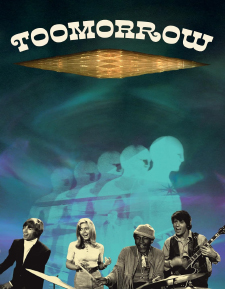
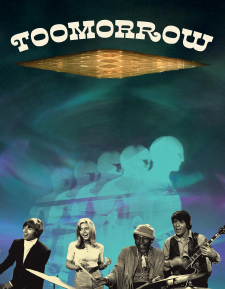
A few years after that, Kirshner hooked up with Bond producer Harry Saltzman in an attempt to repeat the process by putting together a new band called Toomorrow, and if you’ve never heard of Toomorrow, well, that speaks volumes about how the collaboration worked out. The initial lineup consisted of Benny Thomas on guitar and vocals; Vic Cooper on keyboards; Karl Chambers on drums; and a fresh-faced young singer named Olivia Newton-John performing lead vocals. The intention was to introduce them via a feature film also called Toomorrow, and the band members were signed to a three-picture deal in anticipation of good things to come. But before the film even opened late in 1970, Chambers had already left the group (he was replaced briefly by Tom Jones drummer Chris Slade), and as far as that opening went, let’s just say that there’s a good reason why you may not have heard of the film Toomorrow, either.
Kirshner and Saltzman never saw eye-to-eye on the project, and neither did much of anyone else. Saltzman hired renowned British director Val Guest to helm the film and novelist David Benedictus to pen a script for it, but no one was happy with Benedictus’ work, so Saltzman told Guest to go ahead and write the whole thing himself. Kirshner retained Ritchie Adams and Mark Barkan to write the saccharine (and frankly, forgettable) pop songs for the soundtrack, with Thomas, Cooper, Chambers, and Newton-John serving only as performers (although unlike The Monkees, at least there wasn’t any controversy over that detail). The story that Guest refined for the final film defies description, but let’s give it a college try anyway:
Benny, Vic, Karl, and Olivia are students at the London College of Arts who have been paying their way through school by performing together as Toomorrow, with limited success. Things are a bit chaotic at the college, with student groups staging sit-ins to demand more participation with the decisions made by the administration, and when one of the sit-ins turns into a dance-in, Toomorrow keeps it swinging. Meanwhile... nearby wealthy landowner John Williams (Roy Dotrice) is actually an alien Alphoid in human disguise. He’s been observing the human race for millennia to see if they have anything positive to offer the Alphoids, with little success so far. But Vic’s custom keyboard setup called a “tonaliser” is creating good vibrations that offers new life for the otherwise sterile Alphoid lifestyle. The Alphoid leadership wants Williams to bring the group up to their hidden spaceship in order to convince them to journey into the stars and spread some intergalactic love. And if all of that sounds like a fever dream, Guest reinforces that fact by tacking on an ending that returns Dorothy back to Kansas.
So, while Toomorrow may have been conceived as a way to introduce a new hit group to a public that wasn’t ready for it, their music ended up being one of the least significant elements of an admittedly uneasy sci-fi/fantasy/pop culture stew. To bring all of the necessary weirdness to life, Saltzman employed some technical masters like makeup designer Stuart Freeborn and special effects wizard John Stears, and as a result, Toomorrow doesn’t look quite like any other film (although the Alphoid crystalline structures do foreshadow the similar designs that would be used a few years later in Superman). 2001 may have been the ultimate trip, but Toomorrow is trippy enough in its own right.
And despite the inoffensively schmaltzy nature of Toomorrow’s music, Toomorrow demonstrates a refreshingly free attitude toward sexuality (both human and Alphoid). Casual hookups are treated non-judgmentally, and the band members are quite open with each other, even sharing the same bath water without a second thought. The Alphoids, meanwhile, don’t draw gender lines at all, with nominally “masculine” figures having no issues whatsoever with taking on female form (and behavior!) for their human disguises. While British pop culture in general has long embraced cross-dressing to a greater degree than its American counterpart (this was the era of Monty Python’s Pepperpots, after all), the Alphoids go far beyond mere transvestitism to become openly trans in their human incarnations.
So, with a carefully constructed pop group, a few swingin’ tunes, some groovy visuals, and a full embrace of the Sexual Revolution, what could possibly have gone wrong with Toomorrow and Toomorrow? Harry Saltzman, for one. He didn’t pay anyone a single pence for their work, Guest included, and so the director obtained an injunction against the film that prevented it being shown until after they got their money—which never happened. As a result, Toomorrow closed a week after its premiere and was shelved after that, although not exactly in permanent fashion. It has received a few rare screenings over the decades, but it’s still largely unseen and unknown outside of faithful Val Guest and Olivia Newton-John fans. And aside from a couple of perfunctory videotape and DVD releases, it’s been scarce on home video, especially in HD.
Yet thanks to a recent collaboration between Deaf Crocodile Films and the British Film Institute, Toomorrow has been digitally remastered and released in Blu-ray format on both sides of the Pond. Tomorrow, and tomorrow, and tomorrow may still creep in this petty pace from day to day to the last syllable of recorded time, but Toomorrow is no longer a walking shadow that strutted and fretted its hour upon the stage and then was heard no more. It’s now readily accessible, in all of its Technicolor glory, for new generations to discover—and likely to be confounded by, but still!
Cinematographer Dick Bush shot Toomorrow on 35mm film using anamorphic Panavision lenses, framed at 2.35:1 for its theatrical release. This version is based on a scan of the original camera negative, with a 35mm IB Technicolor print used to supplement a few shots where the negative had been excessively scratched (primarily in reel 4). Presumably, the IB Tech print was also used as color reference for the grading by Tyler Fagerstrom (Val Guest and Dick Bush are both long gone at this point). The entire project was overseen by Michael Coronado and Deaf Crocodile’s Craig Rogers.
Some of those scratches are still visible, and there’s also a bit of speckling and an occasional hair at the edge of the frame (to be fair, some of the blemishes do appear to be part of the original optical work, which doesn’t look like it was very clean). That’s all pretty minimal, however, and generally things look sparkling, nicely detailed, and very mod. The shots that were derived from the print don’t stand out too much, with everything mostly looking consistent and smooth. From the cool blues of Alphoid spaceship to the orange flower decals adorning the band’s pale yellow 1963 Ford Consul Cortina Estate Super (not the rare “Woody” version, unfortunately), all of the colors seem accurate, and the contrast range is excellent. To say that this is a huge upgrade over DVD would be an understatement.
Audio is offered in English 2.0 mono DTS-HD Master Audio, with optional English and English SDH subtitles. Mono or not, the quality of the sound is quite good, with a decent frequency response and a bit of dynamic range to it. The dialogue remains clear, and while the songs by Adams and Barkan are what they are, they sound as good as they can here (although the fine score by Hugo Montenegro stands on the plus side of the equation).
The Deaf Crocodile Deluxe Limited Edition Blu-ray release of Toomorrow includes a 60-page booklet featuring essays by Dennis Bartok and Walter Chaw, as well as the transcript of a Q&A with Bartok and Guest that took place after a 2002 screening of Toomorrow at the American Cinematheque (Bartok has long been a champion of the film). Everything comes housed in a rigid slipcase with a J-card slipcover, with new artwork designed by Beth Morris. The set was limited to 1,500 units and appears to be sold out, although Deaf Crocodile is also offering a standard version minus the slipcase and the booklet. The following extras are included:
- Commentary by Andrew Sandoval
- Musical Humanism Through the Stars (HD – 11:56)
- The Nose Has It (HD – 8:03)
- Val Guest Guardian Interview (Upscaled SD – 64:56)
- If I Could Turn You On (HD – 12:43)
- Val Guest Interview (HD – 10:02)
The new commentary features author, musician, and record producer Andrew Sandoval, who also hosts the Come to the Sun program on WFMU radio. He provides some background about the film, from its conception to details about the production and its disastrous release (including issues with the record label). Unfortunately, he does fall into the trap of describing what’s happening onscreen, and he also gets sidetracked with a lengthy criticism of the film, saying that it stretches its concept out too far, looks dated and cheap, and doesn’t have enough music. But he rallies by telling listeners not to worry, he still has more hard facts to share. While there’s a few lengthy gaps after that point, he does get into further details like biographical information about the cast and crew.
Musical Humanism Through the Stars is a new visual essay by critic Celeste de la Cabra, who calls Toomorrow a film that needs to be seen to be believed. She recaps the story with an emphasis on its themes, especially the humanistic power of art. It’s The Monkees with more open sexuality and some tepid political activism (the various sit-ins are on behalf of scholastic rights rather than civil rights). Ultimately, moral authority and wisdom in Toomorrow is contained in youth itself.
The rest of the extras are archival, although they’re still new to this edition since the only previous disc releases of Toomorrow were a 2014 DVD from Pickwick Visual Entertainment and a 2023 DVD rerelease from Screenbound, both of which were bare-bones. The first is The Nose Has It, a 1942 short film from the British Ministry of Information that was directed by Val Guest and stars comedian Arthur Askey—essentially asking the people to aid the war effort by not spreading germs. There’s also a 1969 experimental short directed by Bernard Coyne, If I Could Turn You On. It documents a performance at the Camden Roadhouse, which was one of the locations used in Toomorrow.
Finally, there are two archival interviews with Val Guest. The first (and lengthiest) is a Q&A conducted at the National Film Theatre in 1998 on behalf of The Guardian, moderated by David Meeker. (Guest’s wife Yolande Donlan joins partway through). It’s a broad look at Guest’s career, including shorts like The Nose Has It, culminating with questions from the audience toward the end (unfortunately, no one had the foresight to ask about Toomorrow). The second interview is from an audio-only session with Roy Fowler in 1988, but it’s been newly set to clips and stills from the film by Someone’s Favorite Productions. Guest discusses casting Olivia Newton-John, his legal conflicts with Saltzman, and how to that day he had never received a penny from the film.
Toomorrow is being released simultaneously in the U.K. by the BFI, and they share all of the same extras with Deaf Crocodile, although they offer their own booklet and add a couple of archival shorts not included here: Toomorrow Night in London (1969) and Chimp-Mates: Alice Goes Pop!. But those are pretty minimal, and their disc is also Region B coded. Deaf Crocodile’s disc is Region A friendly, and the fact that their booklet includes the Q&A with Bartok and Guest is a major bonus. Toomorrow won’t be everyone’s cup of tea, but it’s still wonderful that Deaf Crocodile is offering it to a wider audience in North America. It’s the kind of film that has to be seen to be believed, and if you can’t see it, you’ll never even have the chance to believe! But the truth is out there, and thanks to Deaf Crocodile, now so is Toomorrow. Recommended for the adventurous at heart.
-Stephen Bjork
(You can follow Stephen on social media at these links: Twitter, Facebook, BlueSky, and Letterboxd).