
Frankie and Johnny (Blu-ray Review)
Director
Garry MarshallRelease Date(s)
1991 (October 29, 2025)Studio(s)
Paramount Pictures (Imprint Films/Via Vision Entertainment)- Film/Program Grade: B+
- Video Grade: A
- Audio Grade: A
- Extras Grade: B-

Review
[Editor’s Note: This is a Region-Free Australian Blu-ray import.]
Garry Marshall (1934-2016) had a long career in show biz, first as a joke writer for comedians like Joey Bishop and Phil Foster, and later for The Tonight Show during the Jack Paar years. With partner Jerry Belson, Marshall found success writing for sitcoms, particularly many fine episodes of The Dick Van Dyke Show before turning to producing in the 1970s, notably the funny sitcom adapted from Neil Simon’s The Odd Couple. He then struck gold with a series of sitcoms for ABC: Happy Days, Laverne & Shirley (featuring Foster), and Mork & Mindy. All of these later shows “jumped the shark” early in their runs—indeed, the term is derived from a fateful episode of Happy Days—but they undeniably lured away millions of viewers previously devoted to Norman Lear’s sitcoms over on CBS.
As those show began to wane, Marshall tried his hand at directing features, some 18 films between 1982 and 2016, the year of his death. His biggest success was Pretty Woman (1990), the film that solidified Julia Roberts as a major star, and which from a very modest $14 million budget earned $463 million—nearly half a billion—at the box-office. Originally conceived as a much darker, more serious film about prostitution, Marshall refashioned it into a much lighter, romantic comedy-drama complete with contrived happy ending. One might argue that in virtually glamorizing prostitution, Marshall was being socially irresponsible, but his commercial instincts, at least, were spot-on.
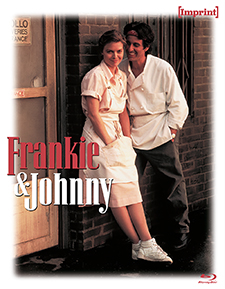
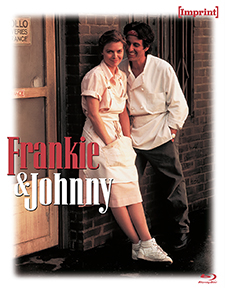
Immediately following that film, Marshall similarly retooled Terence McNally’s two-character play Frankie and Johnny in the Clair de Lune for Frankie and Johnny (1991), which McNally also wrote, no doubt with a lot of input and changes suggested or imposed by Marshall. It doesn’t much resemble the play—that takes place entirely in a one-room Manhattan apartment—McNally adding dozens of new characters and myriad locations... and a lot of jokey humor. The play, directed by Paul Benedict, about a short-order cook and waitress, both lonely, who become lovers, originally starred Kathy Bates as the waitress and F. Murray Abraham as the cook, though Kenneth Welsh played that part for most of the play’s run. Nearly every review of the movie remarked how miscast Michelle Pfeiffer is in the role of the frumpy, middle-aged waitress—one reviewer opined that was like casting Kevin Costner as Marty. Nevertheless, Marshall’s film is much better than Pretty Woman, maybe the best of his spotty feature career.
Newly released from prison, middle-aged Johnny (Al Pacino) finds work as a short-order cook at a popular, unpretentious restaurant called the Apollo Café, owned by Greek Nick (Héctor Elizondo). Frankie (Pfeiffer) works as a waitress there, along with even frumpier Nedda (Jane Morris) and sexually promiscuous Cora (Kate Nelligan, very good). Johnny is immediately attracted to Frankie, but she’s unusually resistant, having been emotionally scarred by past relationships. Overly-aggressive Johnny and Frankie’s best friend/gay neighbor Tim (Nathan Lane—who else?) wear her down, and they go out on a date.
She begrudgingly finds Johnny appealing, but she’s also high-maintenance and resistive, constantly insisting that she doesn’t want to be in a relationship, that she’d rather stay home with her broken VCR. For his part, Johnny is more than a little smothering and doesn’t know when to back off, even a little. This being a Garry Marshall romantic comedy-drama, of course things will turn out all right in the end, but everything the movie audience sees suggests they have no future together.
Though like Frankie’s VCR the film is dated in some respects, somehow, it’s mind-boggling to realize that Pacino is now 85 years old and Pfeiffer fast approaching 70. Where did the time go? The film’s depiction of pre-gentrified Manhattan and its inhabitants is authentic in its griminess and eccentricities, if extravagantly overdone. Still, it has a look closer to, say, the amusing, spot-on send-up of the city found in the original The Taking of Pelham One Two Three than, say, an episode of Friends.
Though teetering toward creepy in his obsessiveness, a modern take on the Astaire-Rogers musicals where Fred would win Ginger over by pestering her to death, Pacino delivers a strong, likable performance as Johnny. Pfeiffer is technically fine as Frankie, even impressive in her committed acting, but can never quite escape the nagging reality that she’s simply too beautiful to be believed as an Old Maid. Throughout the picture, one can’t help but imagine Kathy Bates saying the same lines in the same situations, lessening the film’s impact. Many of the film’s Garry Marshall-esque jokes are actually pretty funny, and Nathan Lane, who gets all the best ones, is often hilarious.
Frankie and Johnny is also, intriguingly, adult in a way that major studio pictures rarely are anymore, even though this was high-concept commercial entertainment when it was new. Where Julia Roberts was just 22 while shooting Pretty Woman, Pfeiffer was 33 and Pacino was 51—middle-aged—and not appealing to today’s perceived ideal demographics. In the movie, Frankie and Johnny talk frankly about condoms and sex generally. Ultimately, it’s about loneliness, of needing the companionship of others, and how difficult it is for people that have been badly burnt once too often struggle to trust new partners, like an abused pet being nursed back into trusting people again. Frankie and Johnny accomplishes this a lot better than I would have imagined, and the film is genuinely funny and reasonably perceptive.
Imprint’s Region-Free 1080p Blu-ray presents the film in 1.78:1 widescreen, approximating its original 1.85:1 release and looks excellent. The image is impressively sharp yet not over-processed and retains a pleasing film grain quality, with Dante Spinotti’s (L.A. Confidential) cinematography retaining its imaginative color lighting schemes. The film is offered in both DTS-HD Master Audio (5.1 surround) and LPCM 2.0 stereo, with optional English subtitles.
Extras are limited to a new audio commentary by film historian Scott Harrison and a trailer.
I didn’t think I’d care too much for Frankie and Johnny but, with some mild reservations here and there, I liked it a lot. Recommended.
- Stuart Galbraith IV