
Fight Club (4K UHD Review)
Director
David FincherRelease Date(s)
1999 (May 12, 2026)Studio(s)
Fox 2000 Pictures/Regency Enterprises/Linson Films (Sony Pictures Home Entertainment)- Film/Program Grade: A+
- Video Grade: A-
- Audio Grade: A
- Extras Grade: A+

Review
Chuck Palahniuk’s debut novel Fight Club became something of a minor literary sensation when it was published in 1996 (Palahniuk had actually completed Invisible Monsters first, but couldn’t find a publisher until after the eventual success of Fight Club). The book actually didn’t sell very well at first, but it still received a significant amount of critical attention. Best seller or not, that means it was inevitable that Hollywood would come a-knocking, but Fight Club wasn’t just any underground success. It falls into the category of books that are often considered unfilmable, since there was no good way to translate its unique style into cinematic form. Palahniuk wrote Fight Club in first person perspective from the point of view of an unreliable (and unnamed) Narrator, whose own perceptions have been inextricably intertwined with those of his equally unreliable friend and partner, Tyler Durden.
The challenge was that there had never been a good way to translate literary first person into a cinematic one. Using a first-person camera doesn’t work, since that usually ends up acting as a distancing device instead, as Robert Montgomery had inadvertently demonstrated with his experimental Raymond Chandler adaptation Lady in the Lake. (Delmar Daves also used a first-person camera during the opening section of Dark Passage, but in that case, the intent was to disguise the character’s identity, not to place viewers inside of his head.) In lieu of attempting anything quite that drastic, adding a voiceover narration is an obvious starting point, but that still falls short of what Palahniuk’s transgressive fiction accomplished. You can have the narrator break the fourth wall and address the camera directly, but then you’re back to distancing devices again.
Enter David Fincher, a director obsessed with finding inventive ways to express ideas visually, during a time period in which the advent of digital visual effects was providing opportunities to create visuals that wouldn’t have been possible otherwise. Fincher was still fresh off his success with New Line’s smash hit Se7en, and while his follow-up The Game hadn’t performed as well, he was still riding a wave that gave him enough clout to convince a studio to film the unfilmable. There was just one problem: the project was already in development hell at Fox, which had purchased the film rights while the novel was still in galleys. Fincher’s previous experience at Fox was with the notoriously troubled production of Alien3 (a film that he still disowns), so that meant rebuilding some bridges that had burned to the ground years earlier. Which he did, and Fight Club was officially greenlit with Fincher at the helm.
Jim Uhls was hired to pen the adaptation, and according to Fincher, his first draft didn’t even have a voiceover narration. But Uhls eventually found a way to translate the Narrator’s unique voice into the structure of screenplay, and his final shooting script was faithful to the spirit (and especially the dialogue) of the book, if not always its actual form. Finding a way to make it faithful to the feel of the book, on the other hand, required a visionary director like Fincher. To make the limited, unreliable perspective of Palahniuk’s prose work on screen, he had to find a way to get inside the head of the unnamed narrator—which he did, quite literally so. Fight Club opens by placing the viewer deep inside the brain of the Narrator (Edward Norton), starting at his amygdala, with the camera withdrawing rapidly through a tangled web of synapses and neurons accompanied by a driving title theme from The Dust Brothers. It finally pulls out of his head and along the barrel of a gun held by Tyler Durden (Brad Pitt), the architect of Project Mayhem, who has planted it firmly into the Narrator’s mouth.
Just like in the novel, we’re opening in flashback, with the end of the film defining the beginning (a fact that’s referenced later with an impudently self-referential line of dialogue that’s not taken from the book). Discovering how (and why) the Narrator got himself into this predicament will take viewers on a journey not so much through his brain, but rather through the world as it’s been filtered by his brain. The journey really begins when he first encounters Marla Singer (Helena Bonham Carter), who disrupts the comfortable environment that he’s created for himself. Dealing with her will require some outside intervention, and so Tyler Durden enters the picture, giving the Narrator the motivation to act.
I know this, because Tyler knows this.
That line appears for the first time on the second page Palahniuk’s novel, in the eighth paragraph. In the film, it occurs after less than three minutes, opening credits included. Seven simple words, repeated like a mantra all throughout the story, and yet they give away the whole game in from the opening moments. At first, it doesn’t seem like they do, but that’s because our vision has been skewed along with that of our not-so-humble Narrator. The book offers a few other warning signs that we’re eventually going to lose cabin pressure, but Fincher made them manifest by having Tyler appear subliminally four times before he officially enters the story (five if you count the Bridgeworth Suites promo, and six if you count him showing up on one of the people-movers at the airport). The four subliminal appearances are via single frames where he’s spliced into the image, just like Tyler will later splice single-frame pornographic images into children’s films while he’s working as a projectionist.
Tyler also explains how a two-projector setup works at a movie theatre, telling viewers that the changeover marks are called “cigarette burns” in the industry. But that’s simply untrue, as is his assertion that a film frame is on screen for 1/60th of a second. Tyler also offers formulas for napalm, nitroglycerin, dynamite, and more, but they’re equally inaccurate (no, you can’t make napalm by mixing equal quantities of gasoline and frozen orange juice concentrate). We know what we know about the world of Fight Club because the Narrator knows it, and the Narrator knows what he knows because Tyler knows it. But Tyler is no more reliable than the Narrator is. We’re seeing everything through the Narrator’s eyes, and the only reason why we believe Tyler is because the Narrator believes him. Yet we’re both gravely mistaken.
None of that should work on film, but thanks to Fincher, it all works beautifully. Along with cinematographer Jeff Cronenweth and the visual effects department, he created not just a first-person camera, but rather one that’s been completely unmoored, gliding smoothly between reality and fantasy without ever missing a beat (or requiring any editorial trickery). The visual perspective is actually third person, and yet it orients viewers through the Narrator’s psyche in a way that a first-person camera never could have. He has lost his ability to determine where reality ends and fantasy begins, so the lines are blurred for us as well. Fincher actually does break the fourth wall, repeatedly, but since we’re so firmly ensconced into the Narrator’s worldview, it all seems perfectly natural.
This is the greatest moment of our life.
Yet the enlightenment that we’re experiencing is definitely premature. The Narrator and his fellow straight white male Space Monkeys are feeling disaffection and alienation from consumer society, and Tyler’s solution to that problem is to tear all of it down: “It’s only after we’ve lost everything that we’re free to do anything.” And unlike the more ambiguous ending of Palahniuk’s novel, Project Mayhem succeeds at that mission; Fincher took the principle of Chekhov’s gun to heart. Some people just want to watch the world burn, and thanks to Fincher, they got what they wanted. All of that has led to a rather complicated legacy for Fight Club, both for the book and the film. The film underperformed at the box office, but it led to increased sales of the book, especially with—wait for it—disaffected straight white males. Palahniuk had tapped into masculine angst in a way that foreshadowed the cultural changes that would end up leading to our present moment, while Fincher made it manifest in particularly vivid fashion. And yet...
As with many things in life, nothing in Fight Club is quite so simple. There’s an ironic tone to both the book and the film that undercuts toxic masculinity even while it appears to be celebrating it. Fight Club satirizes the consumerist society that Tyler is constantly criticizing, and yet it also satirizes the satire. Tyler’s solution to the Narrator’s angst can be taken at face value (and many people have done just that), but it really shouldn’t be. Tyler is serving as the Narrator’s Id, seeking primal gratification divorced from the morality of the Superego and the rationality of the Ego. Yet he’s also acting like a monster from the Id, wreaking havoc without offering a constructive critique for any of the problems faced by society in general and straight white males in particular. In other words, he’s not the hero, however compelling that he may be. Now, whether or not Palahniuk, Uhls, or Fincher intended all of that is a fair question, but the genius of Fight Club is that it doesn’t really matter if they did. It’s an open text that’s grown beyond anything that its creators could possibly have intended. Just like Project Mayhem, it’s beyond anyone’s control.
Trust me. Everything’s gonna be fine.
Cinematographer Jeff Cronenweth shot Fight Club on 35mm film (in Super-35 format) using Panavision Platinum cameras with Primo spherical lenses. He shot on Eastman EXR 5248 and Vision 250D 5246 for daylight exteriors (plus a handful of daylight interiors), and Vision 500T 5279 for all the nighttime exteriors and darker interiors. Release prints were anamorphic blowups, framed at 2.39:1 for theatrical release. David Fincher preferred Super-35 since it gave him greater flexibility with lenses, framing, and low-light shooting (and the majority of this film was shot at T2.3 to enhance the intentionally shallow depth of field). Everything was kept dark and high-contrast, by design—Cronenweth told American Cinematographer that he flashed some of the nighttime exteriors, and like Se7en, a few key release prints were treated using Technicolor’s ENR bleach-bypass process. He also said that “we didn’t necessarily want to be able to see directly into (the actor’s) faces. It was more interesting and appropriate to the story to force the audience to pay attention. Faces were generally underexposed 1 and 1/2 to 2 stops, though it depended upon the scene.” That’s something to keep in mind when assessing any home video version of Fight Club, especially in terms of High Dynamic Range grading: done properly, it’s going to be dark.
Fox/Disney describes this version simply as being a “new 4K master approved by David Fincher,” without any other specific details. It’s safe to assume that it’s based on a 4K (or higher) negative scan; unlike Panic Room, post-production work on Fight Club was completed photochemically, so there’s no 2K DI to deal with. But the part of that phrase that’s pregnant with meaning is “approved by David Fincher,” and if you’re familiar with any of his other recent 4K masters, you’ll understand that he did oh so much more than that. We’ll address the changes that he made in a moment; for now, the only fair way to assess the quality of the video is to simply focus on how it looks. And taken on its own merits, this is a striking visual upgrade for Fight Club.
Generally, fine details have been improved compared to the old Blu-ray, although there’s an interesting wrinkle in that regard (no pun intended). Facial textures sometimes seem smoother, but the Blu-ray master had heavy sharpening that exaggerated some of the textures and also exacerbated the grain. The new 4K master doesn’t have that kind of sharpening (although there’s still a bit of ringing around some foreground objects against dark backgrounds), so it may seem softer at first. It really isn’t, though, at least most of the time (don’t worry, we’re still getting to the subject of Marla’s zits). The grain is still present but a bit more subdued, and while it’s always possible a little grain management has been applied here, it’s worth remembering that the reason why Super-35 has a reputation for being excessively grainy was due to the fact that release prints were anamorphic blowups.
The HDR grade doesn’t add any real zing to the image (and it shouldn’t), but the contrast between the darkest and the brightest elements in any given frame has been improved. Cronenweth told American Cinematographer that even the daylight scenes were weighted with deeply shadowed areas. Shots like that do indeed benefit from the improvements in contrast, with more detail visible within those deep shadows. The faces, on the other hand, are frequently just as dark as they were intended to be, so don’t look for too much detail where it shouldn’t exist. Overall, it’s definitely darker than the old Blu-ray, but that was arguably brighter than it should have been, and this is closer to the original intentions. And compared to frame grabs from the old American Cinematographer article, the colors seem accurate, although in a few cases they’ve been changed from the original version of the film. And that, finally, brings us to the subject of Fincher’s revisionism.
Under Fincher’s direction, this 4K remaster of Fight Club has been heavily tweaked, usually in small ways, but there are too many of them to count. The textures (and sometimes shape) of the Paper Street house have been altered; background details have been changed, from cars to bridges and even electrical/telephone wires; the red neon in the Blockbuster Video sign has been changed to blue (although the reflection in the car window is still red; anamorphic lens flares have been added (despite the fact that the film was shot with spherical lenses); Marla’s complexion has been cleared up in a few shots; and much, much more. Most of it seems purely arbitrary, although right or wrong, Fincher may have had his reasons for a few of them—in the book, Marla says that her skin has been clearing up since she started to attend support groups, and the changeover marks have always been anamorphic ovals, so the anamorphic lens flares are at least consistent with that. But in most cases, regardless of Fincher’s motivations, the alterations are arbitrary and completely unnecessary, even though they’re usually pretty seamless and invisible without directly comparing both versions.
Primary audio is offered in English 5.1 DTS-HD Master Audio. Anyone who’s upset about the lack of an Atmos remix has nothing to fear here, because there’s plenty of life left in 5.1, and sound designer Ren Klyce has long been one of the best in the business. His mix for Fight Club does a remarkable job of placing the viewer inside the Narrator’s head, and so it provides a perfect complement for the visuals. In terms of audio design, the listening position is pulled forward toward the screen, drawing the viewer into the Narrator’s (and Tyler’s) unique perspective(s) on the world. While a few of Fincher’s visual tricks may end up acting as inadvertent distancing devices, that effect is counteracted by Klyce’s audio wizardry. The soundstage is wide and deep, with plenty of immersiveness thanks to constant environmental effects like crowd noises, reverberations, and the omnipresent sound of dripping water at the Paper Street house. There are also plenty of directionalized effects that pan between all of the available channels, like during helicopter flybys, or when Marla and Tyler go at it from every possible vector (and then some). The bass is thunderous, from the corporate art ball rolling on its destructive path to the subjective sound of “big Bob’s” heavy footsteps before his fight with the Narrator. It’s all incredibly dynamic, too, with both the mid-air collision and the car crash continuing to be masterpieces of chaotic sound design. (And the closing song by the Pixies remains one of the most perfect musical choices in cinematic history, too.) It’s a spectacular 5.1 mix.
Additional audio options include English 2.0 Descriptive Audio; French, Castilian, German, Italian, and Japanese 5.1 DTS; Spanish (Latin America) and Czech 5.1 Dolby Digital; and Polish 2.0 Dolby Digital. Subtitle options include English SDH, French, Spanish (Latin America), Castilian, German; Italian, Japanese, Czech, Polish, Dutch, Danish, Finnish, Norwegian, and Swedish.
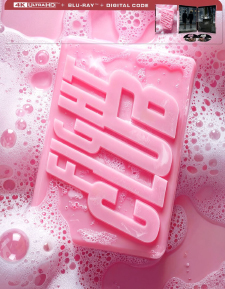
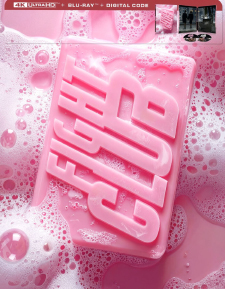
The 20th Century Studios/Disney/Sony 4K Ultra HD Steelbook release of Fight Club is a two-disc set that includes a remastered Blu-ray with a 1080p copy of the film, a J-card slipcover, and a Digital code on a paper insert tucked inside. (And yes, both discs retain the now-familiar Never Been Kissed feint on the menus.) The following archival extras are included—are you sitting comfortably? Then let us begin:
DISC ONE: UHD
- Commentary by David Fincher
- Commentary by David Fincher, Brad Pitt, Edward Norton, and Helena Bonham Carter
- Commentary by Chuck Palahniuk and Jim Uhls
- Commentary by Alex McDowell, Jeff Cronenweth, Michael Kaplan, Kevin Haug, and Richard “Dr.” Bailey
DISC TWO: BD
- Commentary by David Fincher
- Commentary by David Fincher, Brad Pitt, Edward Norton, and Helena Bonham Carter
- Commentary by Chuck Palahniuk and Jim Uhls
- Commentary by Alex McDowell, Jeff Cronenweth, Michael Kaplan, Kevin Haug, and Richard “Dr.” Bailey
- Hit on the Ear: Ren Klyce and the Sound Design of Fight Club:
- Introduction with Ren Klyce (HD – 5:44)
- Welcome to Fight Club:
- Introduction (HD – :45)
- Mix Session, Pt. 1 (HD – 1:06)
- Mix Session, Pt. 2 (HD – :33)
- Angel Face’s Beating:
- Introduction (HD – 2:01)
- Mix Session, Pt. 1 (HD – :25)
- Mix Session, Pt. 2 (HD – 1:19)
- The Crash:
- Introduction (HD – 1:50)
- Mix Session (HD – :54)
- Kudzu Vine Speech:
- Introduction (HD – 1:34)
- Mix Session (HD – :56)
- Flogging Fight Club (HD – 9:58)
- Insomniac Mode: I am Jack’s Search Index:
- Topic Search
- Commentary Guide
- Behind the Scenes:
- Production:
- Alternate Main Titles (SD – 1:34)
- Brain Ride-Map (HD – 2:50, 34 in all)
- Airport (SD – 2:08)
- Storyboards (HD – :40, 8 in all)
- Jack’s Condo (SD – 2:49)
- Storyboards (HD – 1:55, 88 in all)
- Paper Street House (SD – 5:29)
- Projection Booth (SD – 1:57)
- Storyboards (HD – :55, 11 in all)
- Corporate Art Ball (SD – 3:54)
- Storyboards (HD – 1:00, 12 in all)
- Alternate Main Titles (SD – 1:34)
- Visual Effects:
- Main Titles (SD – 3:07)
- Brain Ride-Map (HD – 2:50, 88 in all)
- Fürni Catalog (SD – 2:25)
- Storyboards (HD – :45, 9 in all)
- Ice Cave/Power Animal (SD – 3:15)
- Storyboards (HD – :35, 7 in all)
- Photogrammetry (SD – 3:31)
- Storyboards (SD – :40, 8 in all)
- Mid-Air Collision (SD – 4:42)
- Sex Sequence (SD – 2:37)
- Storyboards (HD – :35, 7 in all)
- Car Crash (SD – 3:50)
- Storyboards (HD – 3:20, 40 in all)
- Gunshot (SD – 3:03)
- High Rise Collapse (SD – 4:46)
- Main Titles (SD – 3:07)
- On Location (SD – 5:24)
- Production:
- Deleted & Alternate Scenes:
- Chloe and Rupert (SD – :53)
- Marla’s Pillow Talk (SD – :35)
- Copier Abuse (SD – 3:15)
- Tyler Quits Smoking/Jack Quits Work (SD – 1:28)
- Angel Face’s Beating (SD – 3:14)
- Walter (SD – 1:39)
- Tyler’s Goodbye (SD – 1:55)
- Publicity Materials:
- Trailers:
- Theatrical Teaser (SD – :47)
- Theatrical Trailer (SD – 2:26)
- The 8 Rules of Fight Club (SD – :46)
- TV Spots:
- USA:
- Getting Excited (SD – :32)
- The Real You (SD – :31)
- Friendship (SD – :31)
- #1 Movie (SD – :31)
- Undeniably Brilliant (SD – :31)
- Friendship Revised (SD – :31)
- Girl’s Club Revised (SD – :31)
- Raw & Exhilarating (SD – :31)
- Beyond the Limits (SD – :31)
- What He Found (SD – :31)
- This Is Your Life Revised (SD – :32)
- Perfect Life (SD – :31)
- International:
- God’s (SD – :16)
- Girl’s Club Alternate (SD – :31)
- Spanish:
- Trailer Cut Down (SD – :46)
- Getting Excited (SD – :31)
- This Is Your Life/Review (SD – :31)
- USA:
- PSA’s (sic):
- Jack’s PSA (SD – :29)
- Tyler’s PSA (SD – :37)
- Music Video (SD – 3:32)
- Internet Spots:
- I Know You (SD – :33)
- Deliver Me (SD – :30)
- Change Your Life (SD – :25)
- Football (SD – :29)
- Mona Lisa/Rel (SD – :35)
- Promotional Gallery:
- Lobby Cards/Advertising (HD – 1:40, 20 in all)
- Press Kit (HD – 2:50, 34 in all)
- Stills (HD – 13:50, 157 in all)
- Edward Norton Text Interview (HD, 13 in all)
- Trailers:
- Art Gallery:
- Storyboards (HD – 22:16, 267 in all)
- Visual Effects Stills (HD – 1:25, 17 in all)
- Paper Street House (HD – 3:05, 37 in all)
- Costumes & Makeup (HD – 1:50, 22 in all)
- Pre-Production Paintings (HD – 4:10, 50 in all)
- Brain Ride-Map (HD – 2:50, 34 in all)
The bulk of the extras were created for the original Two-Disc Special Edition DVD release of Fight Club in 2000, starting with a whopping four commentary tracks. And just like the New Line Platinum Series DVD for Se7en, they’re divided into rough thematic categories. The first is with David Fincher solo, and if you know Fincher, you know what to expect. It’s a deep dive into his thought processes and his attention to every conceivable detail. It’s a demonstration of how he uses his technical prowess to express theme, story, and character, breaking down all of the minutiae on the seemingly most trivial of elements in the film. (Note that all four commentaries offer a topical index so that you can jump directly to specific points.)
The second commentary teams Fincher with Brad Pitt, and Edward Norton with Helena Bonham Carter recorded separately and edited into the track as appropriate. Fincher can be pretty dry when on his own, but Norton and Pitt help keep things lively and a bit more entertaining than on his solo track. Naturally, the actors tend to focus on their own experiences making the film, as well as on their characters, but there’s still some additional practical details here that Fincher didn’t get to on his own. (Fight Club is such a dense film that there’s only so much that you can cover in a single sitting.)
The third commentary pairs Chuck Palahniuk with Jim Uhls, so unsurprisingly, it’s focused on the writing process. They discuss the differences between the novel and the film, and Palahniuk also describes some of his personal experiences that inspired elements of the book, right down to his original inspiration for the story. They even identify contributions from the uncredited Andrew Kevin Walker. While the two of them sat down together to record the track, there are still periodic voiceovers at the beginning identifying each of them, which is a nice touch. (It’s easy to get lost in tracks featuring unfamiliar voices.)
The final commentary features contributions from Jeff Cronenweth, production designer Alex McDowell, visual effects supervisor Kevin Haug, and digital animator Richard “Dr.” Bailey. It’s a little sparser than the other tracks (although they do have a few gaps of their own), but it’s filled with plenty of what Haug refers to as “technical bullshit,” right down to how they constructed Bob’s “bitch tits,” nipples included. Of the four commentaries, this one will be the least interesting for casual fans of the film, but for the OCD types (you know who we are), it’s still essential.
The Behind the Scenes section is also organized by category: Production, Visual Effects, and On Location. The majority of them offer alternate angles and alternate audio tracks that can be accessed via the menu or by remote control, so there’s quite a bit more here than meets the eye. Each angle shows optional material like incomplete or alternate versions, locations scouts, and principal photography. (There’s also a set of storyboards for most of the sub-categories.) The differing audio tracks offer alternate music, location and/or principal photography audio, as well as various pieces of commentary by Fincher, Haug, Bailey, and Digital Domain effects supervisor Kevin Mack. The odd one out is the On Location featurette, which doesn’t have any alternate angles or commentary, but it does show the great Rob Bottin at work and Meatloaf practicing jogging in his fat suit.
The Deleted & Alternate Scenes are brief deletions or alternate material, the most interesting of which is Marla’s Pillow Talk, showing both versions of her post-coital line of dialogue, including the one that Fincher threw in after the studio objected to the first version. (If the suits can’t handle something, always offer them something worse instead.) Note that Tyler Quits Smoking/Jack Quits Work and Angel Face’s Beating both offer alternate angles, while the rest are more straightforward.
The voluminous Publicity Materials leave few stones unturned, save perhaps for the fact that none of them have been upgraded to HD, not even the theatrical trailer. But the highlight out of all of them is still the set of PSAs, which are arguably the best promotional segments from the entire marketing campaign. The Internet Spots are also interesting since they feature footage that was shot specifically for them. The Art Gallery offers multiple sets of stills, from storyboards to production artwork and behind-the-scenes photographs. That includes a full set of storyboards for the film, in order, minus sequences that were never storyboarded in the first place.
The last three extras were all added for the 10th Anniversary Edition Blu-ray in 2009. In keeping with the “interactive” theme of the previous extras, A Hit in the Ear: Ren Klyce and the Sound Design of Fight Club takes several scenes from the film and offers the opportunity to play around with Klyce’s sound mix. It’s not exactly intuitive, but you can use the remote to swap audio tracks and play with the volume level coming from each speaker. It’s a little gimmicky and cumbersome, but the best part about it is the various introductions from Klyce, who explains his reasoning behind the choices that he made.
Flogging Fight Club is a featurette revolving around Mel Gibson appearing at the Spike TV “Guy’s Choice Awards” to give Fight Club the award for being a swell guy’s movie. It also offers some behind-the-scenes footage of Fincher, Pitt, and Norton planning their acceptance speech.
Finally (no, really), there’s Insomniac Mode: I am Jack’s Search Index, which is more or less exactly what it says. It provides a topical index for the film and an interactive overlay for the commentary tracks. For the Topic Search, select a subject, and a list of sections where it’s covered will appear. Select one of them, and it will jump directly to that point in the film with the appropriate audio. (The only hitch is that it doesn’t jump back.) There’s also a Commentary Guide that provides a running popup window showing the subject that’s being discussed in any given moment for all four tracks, allowing you to jump back and forth between them whenever you see something that interests you. It’s a genuinely handy tool for anyone who doesn’t want to take the time to listen to all four tracks, but would rather pick and choose the subjects from each.
The only things missing here from previous releases of Fight Club are the Easter eggs that were on the 2000 DVD, but one of them has been incorporated into the main extras (the 8 Rules of Fight Club teaser) and the other two are outdated (the DVD Production Credits and the Fight Club Merchandising Catalog). Some people may decry the lack of new extras, but with a collection of archival ones that’s as comprehensive as what’s included here, there’s no real need. But make no mistake, these aren’t just archival, they’re also old-school. It takes a bit of effort to dial through all of them, so if you prefer your extras to do the work for you, these may not be the extras for you. Of course, if you prefer to have everything handed to you, then Fight Club may not be the film for you, either.
And if you insist on the original, unaltered version of the film, this 4K remaster of Fight Club probably won’t be the disc for you. That’s perfectly fair; I wish that Fincher had left well enough alone, too. In a perfect world, if he wanted to do his tweaking, the original, unaltered version should have been included as well. But that’s not the world we live in, and this is the only 4K remaster that we’re going to get. It’s understandable if that’s unacceptable to you, but it’s fair to ask one question: would you have noticed the changes if they hadn’t been pointed out to you, or if you hadn’t compared the two versions on your own? However voluminous that Fincher’s changes to Fight Club may be, most of them are small details that require direct comparisons to spot. And there are plenty such comparisons online, so you don’t have to go very far to find them. But taking understandable subjective feelings out of the equation, objectively, honestly, would you really have noticed most of the changes without knowing about them in advance, let alone been bothered by them? If you’re sure that you would, then give this disc a wide berth. But if you have even a sliver of doubt about that fact, then it’s worth taking a look to see what you think. I’m recommending this UHD for anyone with an open mind, although I’m also recommending that you hang onto your old Blu-ray—I know that I am. But after comparing both discs and being honest with myself, I prefer how it looks in 4K, so I’ll probably be sticking with the UHD from now on. YMMV.
-Stephen Bjork
(You can follow Stephen on social media at these links: Twitter, Facebook, BlueSky, and Letterboxd).