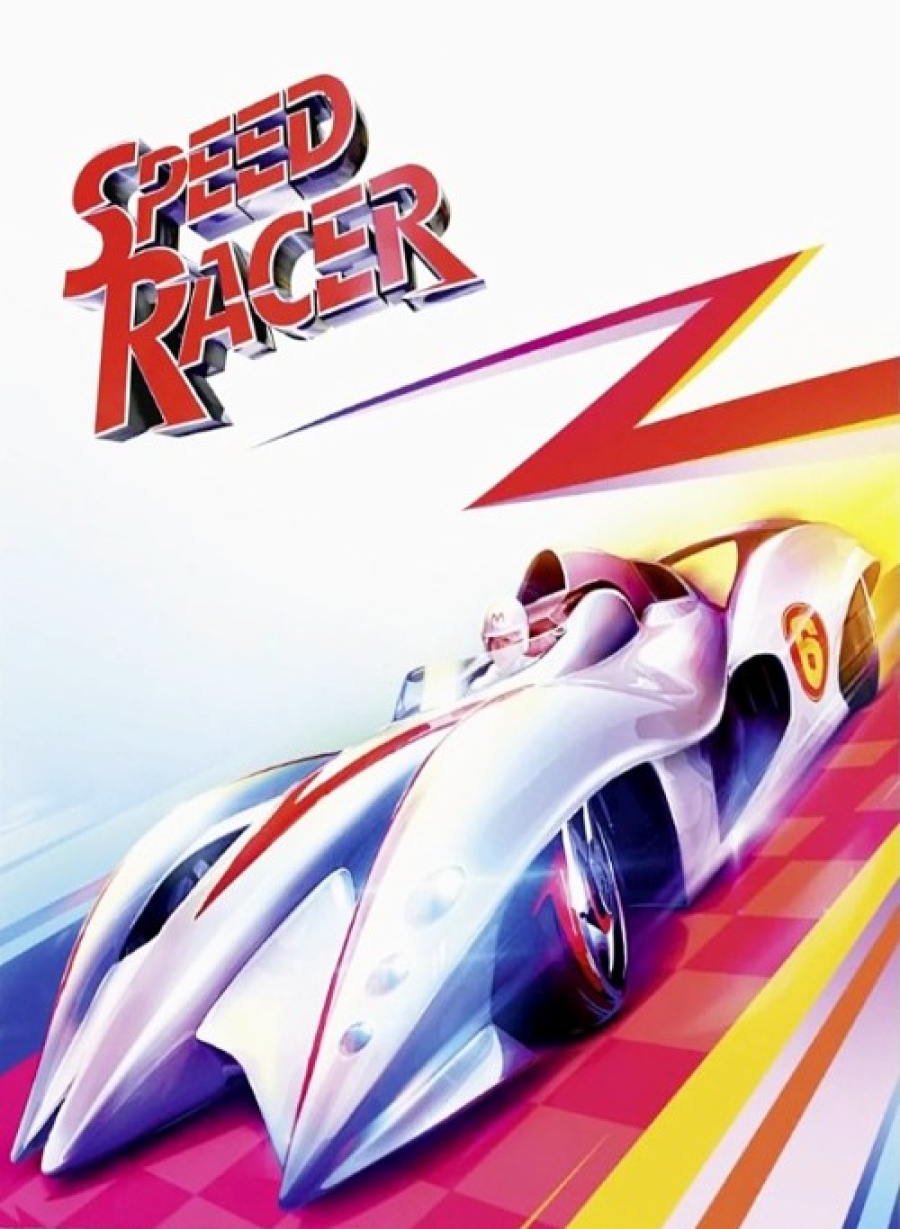




BH: If I’m not mistaken, Speed Racer was originally captured with the Sony CineAlta F23 camera primarily, so it would have been in 1080p resolution. And I believe they shot in up to 60 fps?
JD: Yeah, I think they probably over-cranked it for some scenes, but it was 24 fps, ultimately. If they were going for 60, it would have been for anything slow-mo.
BH: There’s an American Cinematographer article where they talk about using the Vision Research Phantom camera as well for some of those shots, to ensure that the action was always in hyper focus.
JD: Yes, because if you capture with a very, very tight shutter, you’re gonna have a very hard line. If you start to get any motion blur, especially with all the compositing and roto they were doing, that would be a much harder solve. Then you have to get into transparency for the mattes and those kind of things.
So the trickiest part for us in the grade, was we didn’t have the splits. We just had the visual effects already completed and comped. So we had to do all of that roto again to cut those individual pieces out to be able to control them individually.
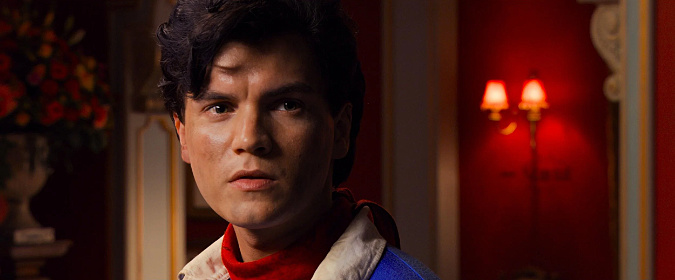
BH: The film, when it was finished back in the day, it was a 2K DI, right? So walk me through the process of, you know, what were the steps involved in remastering this to get it up to 4K. Because my God, it’s stunning. It looks so good now. I haven’t seen it looking that good probably since I was in the theater in 2008, and maybe not even then.
JD: I hope it looks better now!
BH: Well, that was the best memory I had of it before. Because in everything since, the Blu-ray and the streaming image are just riddled with compression artifacting. Especially in the fast motion and stuff like that. But I went to see the IMAX screening at the Chinese Theatre recently, and it was amazing. People were cheering, like literally cheering.
JD: That’s very cool. That [IMAX] might be the best version. I’m very proud of the Dolby version too—if that ever comes out, go see that. You get a little bit more range.
So really, we started with two options. Well, three, technically. First, there was the digital IN that came out of the film recorders. Now, the problem with that is… you can kind of think of it as one digital generation down.
Then you have the photochemical generation of the actual IN, essentially the laser hitting the IN. We could have scanned that, and then started with that source.
But instead, we opted for what created that. So we had also the LTO (Linear Tape-Open) backup of the filmout files that would have come from the camera. Those are 10-bit Cineon logarithmic files, but they’re in camera space.
Often, you color in whatever your working space is—potentially, at the time, it probably would have been P3 DCI, with a slightly more greenish-white point. But then from there, you do a conversion to put it back onto film. Back when DI was actually intermediate stock, right? When they did an intermediate to film. Now, it’s kind of a funny nomenclature.
BH: Right.
JD: We could also have started from the Rec. 709, but the Rec. 709 is already gamma-encoded, so you’ve lost anything that’s clipped or compressed—that data’s gone.
By starting with the log files, we had 12 stops of range, whereas the 709 would have only had 8 stops. So we had 4 extra stops, and that’s why it’s kind of amazing to see some of these visual effects that were at the height of what you could do at the time.
I mean, this is coming off The Matrix Trilogy, really kind of the heyday of what was possible then. But in CG effects, a lot of those still hold up today because of the care and the effort that went into them.
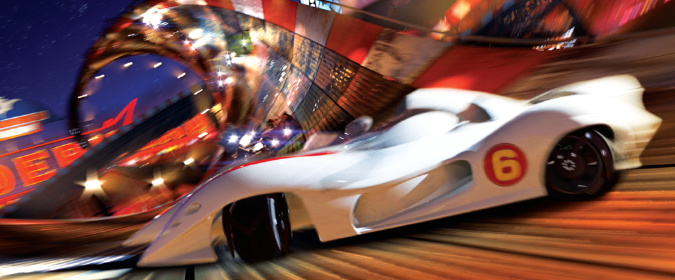
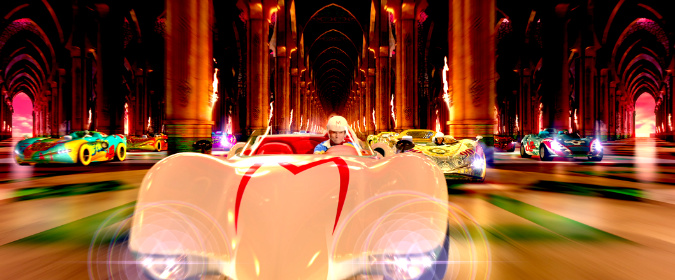
So by starting with the log files and putting it into perceptual space, and looking at this, all of a sudden we start to see that there’s a ton of specular detail and shininess, and all these highlights that are blinging as they’re going past the cars and everything. But all of that was clipped [in the final theatrical presentation].
Now… it didn’t do us any service that the Mach 5 is white, right? So now you have gleam on top of bright white.
BH: Which I imagine was a challenge.
JD: Totally. Yet all of that detail came back, because that was all contained in that logarithmic file. But this is in a very twisted space from the original. It was built for a film recorder, right? At the time, it was probably like an ARRILASER or something—I’m not 100% sure.
So the first step was to get it back to what would be the answer print. But that would still just be essentially the DCP package—that’s still not what we want to start with.
So I used a tool that I’ve developed in-house here that basically does an algorithmic fit—to try to figure out what the best curves are to fit it to, back to the original. I ran that across the entire film. And from that, I took each transform—for each shot—and averaged them out. By averaging them out, you lose the individual corrections.
What you’re left with is the generic show transform that would have been used back in the day. But now I have it programmatically. So now, I can take that and open it up to do different targets. And that was all done in ACES 2.0, in a working space of ACES CCT.
I’m getting a little nerdy and technical and in the weeds here...
BH: Hey, go for it!
JD: But by doing that, now I can hit every target and really grade it once, and the only thing that’s changing is the output transform.
So, to make the Dolby 108 nit version, it’s a certain output transform. To make the HDR4000 nit—this is the first one, I think. We’ll have to talk to Miles on this one, but I’m pretty sure—because I had to fight for this—the first one that we are allowed to go outside of the P3 color gamut. So it’s through Rec 2020.
BH: Which, which makes sense.
JD: This is the movie to do it, right? If you’re gonna do it, you need a why, right? You always need a why. I mean, most natural photographic elements, they fall well within even 709, really.
BH: Yeah.
JD: And it’s only animation that kind of gets out to that P3 gamut, and then beyond. And this is a live-action animation, right? Meant to be like anime, but with real people. Also, you’re starting to see some consumer displays from Samsung, LG now that can start to really get out there to Rec 2020, and not just marketing hype. So this is the time to do it.
BH: Right.
JD: That was why that choice was made to be able to open it up. You need material that can push the limits, and there’s no better project than this one to do that with. So that was the thought process behind getting it back to the original, what I would call print curve. And then opening that up to what the standards of today can do.
BH: And I would assume you did that scene by scene?
JD: Shot by shot, basically. Again, it was this program I wrote that algorithmically did that at first, which gave me the show LUT, and then from there enhance it shot by shot. It was really, go find the edge, and then take one step back.
BH: Yeah, that makes sense.
JD: I feel like that stayed true to how they were making the film back in the day, right? It’s sort of the vibe of the movie. Go right to the edge, then just come back a little bit. If you think of it like racing, it’s just holding onto the edge of where the tires grip. You don’t want to drift.
BH: So what resolution are you working in at that point?
JD: Most of the color work was actually just done at the native resolution. So the file that we had was film aperture, but we were extracting 2048 x 858. But then that’s 2K, right? And we’re releasing this UHD. Now, I’m not a big fan of any of the AI uprezzers that are out there commercially available, like off the shelf. In this case, I didn’t want to… plastify it, if that’s a good word?
BH: Yeah, I totally get it. That’s been a problem on other releases. The Terminator 2 4K comes to mind.
JD: You want to keep all that original detail that’s in there. So what we did was, I have some in-house tools here. One of them is called Samurai. It basically will take what is there, and it’s been trained on a bunch of film material, so it understands what noise and film grain looks like. It doesn’t really wipe everything out. It really just locks on to what is there [detail-wise]. And if you have any kind of aliasing, it’ll try to fix that, and really breathe more life into it. Now, it doesn’t do a perfect job. There’s still some visual effects in there that are a little buzzy and chattery, just because of the rendering ability at the time.
BH: I’ll tell you, I was very impressed with the result. Just comparing the original Blu-ray to the new 4K image… previously, there was so much more aliasing and noise. So it really did wonders on this. The image really does look substantially better than it ever has before. I was blown away.
JD: Well, I appreciate that. So you do the color work first—so you’re just not dragging around more pixels than you need to at that stage—and then, right before Lily and Lana came in, that’s when I ran it through the uprezzer to UHD. Then from that moment, when they came in, it was like: Okay, now we’ve got you back to a modernized version of your film as it was before. Now what would you like to do to it?
BH: I see.
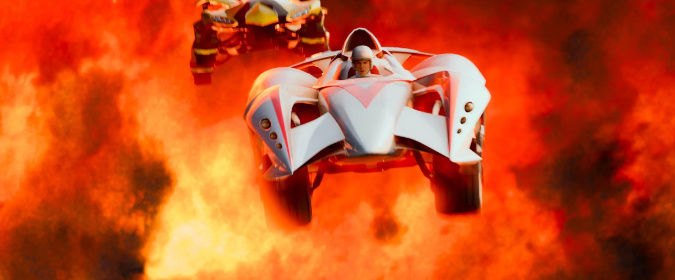
JD: And so we spent a few days with them and really kind of honed in and dialed it in to where they were happy. And it was fun to see the choices that they made in HDR, because really what it came down to was: Now that you have this little extra bit of range, right, a lot of it was lifting things up. So I set middle gray where it would have been originally and then, Lana and Lily, they wanted to bring it up a little bit, but then take the black back down. So now you have this extra bit of detail in the shadows that you never saw before. A notable example is Emile’s hair, right? You can still see strands, whereas in the original version it was just black.
BH: What I certainly noticed was lot more dimensionality in the image, more depth. And the detail that was there really stood out—the canvas of young Speed’s shoes in the opening, for example, and the texture of the test paper he was scribbling on. And the thing that was so shocking, if you will, was how solid it all was. Even in fast-motion scenes. Like… it’s just rock solid. Right from the start, when the when the logo spins out, and the colors are incredibly bold, and there’s just no aliasing. And you’re like, oh my god! It’s kind of an opening statement.
JD: It’s: Okay, let’s go! Like... whoa, this is gonna be something.
BH: Exactly. And it’s outstanding.
So were there any… was there anything else they [Lana and Lily] kind of tweaked or adjusted that you found interesting?
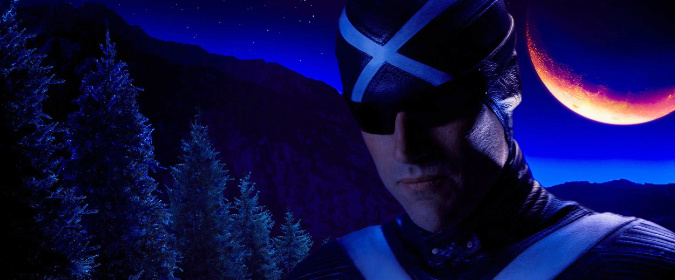
JD: Yeah, there were a couple locations. One of them that was noticeable was… there’s the one where Racer X comes up on the 18-wheeler with the gangster’s office…
BH: Right, the “Mammoth Car” from the original series.
JD: Yeah, the Mammoth Car. And so that one, it was kind of interesting to see how they wanted that to feel like a comic book. So we did some interesting things there where we kind of compressed the gamut, but then pushed it back out to make it really graphic-y, and it kind of has a cool look to it.
Other locations, a lot of it was just making sure the skin tone was tracking correctly, right? With those digital cameras—it wasn’t like film, you know, where you shoot something in 5219 Kodak and the skin tones come out very lovely and creamy and all that. For the digital cameras… that was early days, for sure. And so just making sure that all of that was tracked through. A lot of it came from the spill suppression that was used on the original green screen shooting. And so it was just getting that back, to have life into it—a little bit of saturation in the skin tones and those kind of things were definitely points we were hitting across the way.
BH: Which is remarkable, considering that almost everything was shot on against a green screen, you just would never know it. I mean, this obviously feels like a creation. It feels like a piece of artwork. But it all feels natural within the world of the film, you know? Somehow, there’s a weird unity here, even though it’s all planar and assembled, things moving sideways. But somehow it doesn’t feel false have. Like, for example, in the way that Phantom Menace sometimes does. Or, you know, the other Star Wars prequels using similar technology.
JD: It [Speed Racer] has an artificiality, but within the world, you completely buy into it.
BH: Right.
JD: Well, I mean… Lily and Lana, they’re artists to their core, right? And so, a little bit of this was staying true to the kind of stylistic choices that the Japanese were doing with their animation, right? One of the techniques is where you have something that’s static, but the background’s moving on a loop.
BH: Exactly.
JD: And so many of those elements, you could definitely feel it’s just staying true to the material, and really having a stylistic vision. I had a DP that I’ve worked with for many, many years now, Theo van de Sande. And he would always say that every film sets its own rules. And as long as you stay within those rules, there’s no wrong answer. And so this one was definitely set up in that way, where it’s like: This is the world, so this is what we’re doing, right? It’s just a very, very cool project.
I remember when Lana comes in, she’s wearing a Speed Racer vintage T-shirt that she had modified and made it her own, and I’m just like, you’re such an artist in everything!
BH: Clearly, Lana and Lily had a genuine love for and knowledge of the original. And I can definitely relate. As I sit here now, there’s a diecast Bandai Mach 5 on the shelf next to me.
JD: Yes!
BH: So this film, for me, was just like… I was definitely in the target audience.
I also really appreciate that you guys released this on 100 GB disc, so the video compression has plenty of room to breathe.
JD: Yeah, absolutely. That’s the best way to see it, right? There is no replacement for physical media. It doesn’t matter what your bandwidth is to your house, this is gonna look amazing if you get that disc.
BH: Well… and there are studios where—Disney comes to mind. Where sometimes they’ll just put stuff on a 60 GB disc just to save a few cents, you know? Regardless of what the film really needs.
JD: Yeah.
BH: I love that you guys gave this, from start to finish, the treatment it deserves. Dolby Vision, Dolby Atmos, maximum bitrates.
JD: There’s one thing that you could say about our studio here is, we care.
BH: It’s appreciated. This film, I think it’s a masterpiece.
JD: Well, one of my great memories of working on it was… you know, we get through the very first race scene, right? And Lily and Lana go like this. [He snaps his fingers.]
And I’m like—I think that’s good! I think we’re okay, everybody! I think they’re happy.
You know, we’re going through it, I’m hitting their notes, and then we break down for lunch. And I was telling them about my father, and how he introduced me to it [Speed Racer], and one of his first jobs was, you know, translating from Japanese to English and all this stuff, and just saying how that was a very formative memory for me, being young, and the family business. And Lily and Lana start saying, “Well, if you take all the racing out of this… out of this film and replace it with filmmaking, it’s the story of our life.”
And then I got goosebumps, and I was like—that really hit. And so you can kind of think about it, where it doesn’t matter what your religion is. It could be filmmaking, it could be racing, right? But this film can resonate with everybody, as long as you have your passion, and you just, you know, chase after it in the purest form.
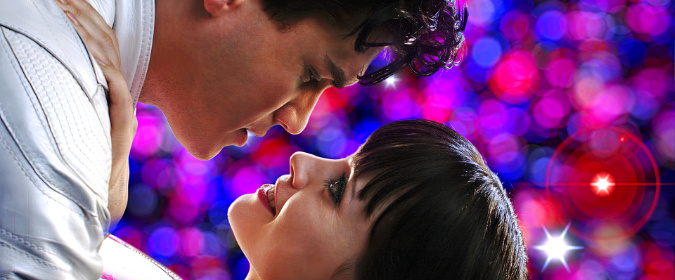
BH: Yeah, that’s exactly right. When you watch the retrospective feature out that’s on the disk, they’re genuinely emotional talking about this film. It’s so clear how much of their own lives they put into this film—how personal it is to them. So I’m really glad that the rest of the world has finally come around to appreciate Speed Racer.
JD: They always operate on a different level, man. And it’s always fascinating to kind of… you get down and you see, you begin to see and appreciate it. And it just gives everything they do that added little bit of resonance.
BH: Well, dude… I really appreciate this. I’m so in awe of what you guys have done here, and I appreciate it. What you do in remastering, it’s kind of magic. I mean, there’s a science to it, and it’s very technically precise, but there is so much of an art to it too.
JD: It’s where science and art overlap. I’ve always liked about, you know… growing up in the film lab was, it’s very much chemistry and a lot of math that goes into it. But ultimately, we’re trying to make something that is beautiful and touching on the screen.
BH: You guys nailed it. So thank you.
JD: Thank you!
--end--
Thanks to John Daro and the whole team at Warner Post Production Creative Services for their work on the Speed Racer 4K release.
Thanks also to everyone Warner Bros. Discovery Home Entertainment for making it possible.
Before I sign off, there’s some great additional reading and viewing you might want to do if you’re a fan of this new Speed Racer 4K Ultra HD release. First, Daro has written a great blog entry (on his website) on the process of remastering the image that has additional technical information. You’ll find that here:
Go Speed Go: Remastering the Hyper Color World of Speed Racer in 4000-Nit HDR
Also, Warner has released a series of YouTube clips with John and some of the other technical team members who worked on this release talking about their efforts. You’ll find those here, and I recommend each of them…
And don’t forget, you can also read my in-depth review of the Speed Racer 4K disc here on The Bits (which I will soon be updating with additional remastering details).
Enjoy!
- Bill Hunt
(You can follow Bill on social media on Twitter/X, BlueSky, and Facebook, and also here on Patreon)